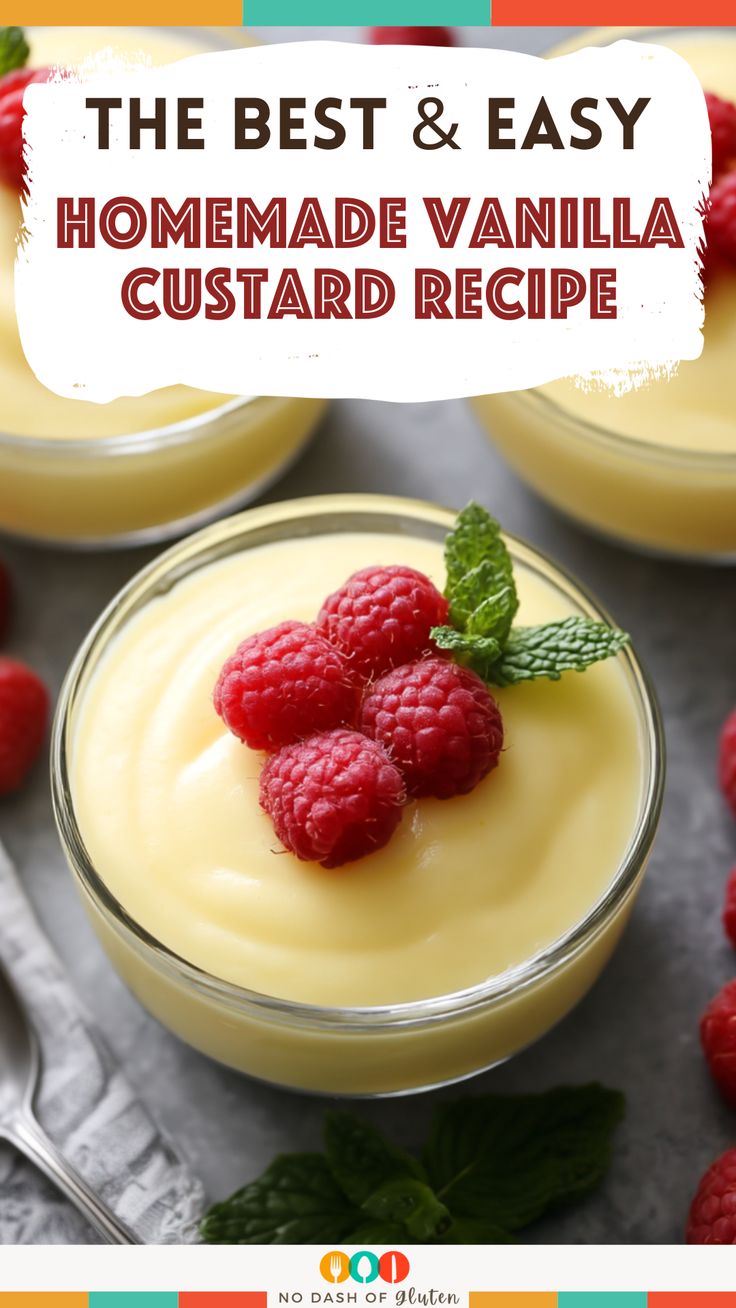
Indulge in Timeless Comfort: Your Ultimate Homemade Vanilla Custard
As the sweet, warm aroma of vanilla gently unfurls through your home, wrapping you in a comforting embrace, it’s a sure sign that something truly special is brewing in your kitchen. That feeling, reminiscent of cherished childhood memories, often precedes the creation of what many consider the pinnacle of dessert accompaniments: homemade vanilla custard. Far from a mere side dish, real vanilla custard is a culinary marvel, transforming everyday desserts into extraordinary experiences. This isn't just any recipe; this is about achieving the ultimate homemade vanilla custard – a silky smooth, luxurious delight that transcends expectations with its rich flavor and incredibly versatile nature. And the best part? It typically requires just five simple ingredients and a straightforward process, proving that the most profound comforts are often the simplest to create.
What sets this homemade custard apart is its unwavering commitment to authentic flavor. While many might reach for vanilla extract or paste, the ultimate homemade vanilla custard insists on the robust, nuanced essence derived from real vanilla beans. This choice elevates the taste profile, infusing every spoonful with an unparalleled depth that artificial flavorings simply cannot replicate. Whether served warm, poured generously over a comforting apple crumble, or chilled to perfection as a delicate base for fresh berries, this traditional egg custard promises a pourable consistency – much like a refined crème anglaise – making it the ideal partner for an array of warm desserts, from pies and tarts to cakes and puddings.
Decoding Custard: More Than Just a Dessert
The term "custard" can sometimes be a bit of a culinary chameleon, shifting its meaning based on geography and consistency. In the United Kingdom, "pudding" is a general term for dessert, whereas in America, "pudding" typically refers to a specific type of creamy, often starch-thickened, dessert. Custard, however, holds a distinct identity. At its heart, a custard is a wide-ranging category of products primarily made from milk and/or cream, eggs, often vanilla, and sometimes a supplemental thickener. The defining characteristic that truly distinguishes custard from many "puddings" is the inclusion of eggs.
Eggs are not merely an ingredient; they are the architectural foundation of custard, providing its signature silky-smooth texture and rich consistency. This fundamental use of eggs is what gives custard its unique body, whether it's prepared on the stovetop, gently baked in a bain-marie, or crafted using other methods. Regardless of the cooking technique, if eggs are thickening a dairy base, you're likely making a custard. Without eggs, a similar mix of dairy and a thickener would typically result in a blancmange, a distinct dessert with its own charm but lacking the characteristic richness and mouthfeel that only eggs can impart.
The Spectrum of Silken Delights: Exploring Custard Varieties
The beauty of custard lies in its incredible versatility, not just in how it's served, but in its very composition and consistency. This adaptability gives rise to a spectrum of delightful variations, each perfectly suited for different culinary applications:
- Crème Anglaise (English Cream): This is the archetype of thin, pourable custard. Light yet rich, it's designed to elegantly cascade over warm desserts like fruit crumbles, chocolate lava cakes, or classic bread puddings, adding a sophisticated touch of vanilla-infused creaminess. For those looking to master this art, understanding the nuances of a real vanilla custard will prove invaluable.
- Crème Pâtissière (Pastry Cream): On the thicker end of the spectrum, pastry cream is a robust, pipeable custard. Its firm yet smooth texture makes it ideal for filling pastries such as cream puffs, éclairs, tarts, and donuts, providing a stable and luscious core.
- Baked Custards: These can range from moderately firm, like a classic custard tart that holds its shape beautifully when sliced, to the delicate, jiggly texture of crème brûlée or flan, which rely on the eggs to set in the oven without any additional starch.
Beyond eggs, thickeners like cornstarch or flour often play a supporting role, particularly in thicker varieties of custard. While not strictly necessary for pourable custards, adding a small amount of starch can work wonders. It not only contributes to the desired thickness but also acts as a stabilizer for the eggs, significantly reducing the risk of curdling – a common fear for many home cooks. This stabilization allows for a more forgiving cooking process, often enabling preparation in a single saucepan rather than requiring a more complex double-boiler or water bath method. Interestingly, many recipes for the ultimate homemade vanilla custard, including variations that remain pourable, skillfully incorporate both eggs and a touch of cornstarch, leveraging the best of both worlds: the richness of eggs with the added stability and silky finish provided by starch.
Crafting the Ultimate Homemade Vanilla Custard: Keys to Perfection
Achieving the ultimate homemade vanilla custard is a journey that, while simple in its ingredient list, truly shines through careful execution. With just five core ingredients, the process is incredibly approachable, but there are a few crucial techniques that transform a good custard into an exceptional one. Mastering these insights will elevate your homemade creation to a professional standard, guaranteeing a consistently smooth and luxurious result every time. For a step-by-step guide to achieving this perfect texture, you'll want to explore How to Make Silky Homemade Vanilla Custard in 5 Simple Steps.
The most critical aspect of making a sublime custard is heat management. This is where patience truly becomes a virtue. Cooking the custard over consistently low heat for a longer duration is paramount. High heat is the enemy of smooth custard, as it can cause the eggs to cook too quickly, resulting in an undesirable "scrambled egg" texture rather than a homogenous, creamy sauce. The goal is to gently coax the eggs and dairy into thickening, allowing them to bind gradually and evenly. The custard should be removed from the heat just as it achieves a consistency thick enough to beautifully coat the back of a spoon. It will continue to thicken slightly as it cools.
While a thermometer isn't strictly essential for this method (the "coat the back of a spoon" test is often sufficient for experienced cooks), for those seeking precision or building confidence, knowing the ideal temperature range can be incredibly helpful. Generally, when cooking custard without cornflour, the temperature should not exceed 80°C (175°F). Higher temperatures risk curdling the eggs. However, with the stabilizing presence of starch in many recipes for the ultimate homemade vanilla custard, you can safely reach slightly higher temperatures, often up to 85°C (185°F), which will result in a thicker final product. Remember, the higher the temperature the custard reaches (within safe limits), the more viscous it will become.
Another crucial tip, especially if your recipe does not combine starch with all ingredients from the start, is tempering the eggs. This involves slowly whisking a small amount of the hot dairy mixture into the egg yolks before adding the warmed egg mixture back into the main pot. This gradual introduction of heat prevents the eggs from scrambling, ensuring they gently integrate into the custard base for that signature smoothness. However, many contemporary recipes, especially those incorporating starch upfront, streamline this process, allowing for simpler, single-pan cooking without the need for traditional tempering steps.
The Unrivaled Magic of Real Vanilla Beans
When we talk about the ultimate homemade vanilla custard, the choice of vanilla is not merely a preference; it's a foundational decision that profoundly impacts the flavor profile. While vanilla extract and paste are convenient, nothing quite compares to the profound depth and aromatic complexity delivered by real vanilla beans. Vanilla beans offer a bouquet of over 200 flavor compounds, creating a nuanced, floral, and subtly woody taste that synthetic versions simply cannot replicate.
To harness this magic, split a vanilla bean lengthwise with a sharp knife and scrape out the tiny, fragrant seeds. These seeds, along with the pod itself, can be infused directly into your warm milk or cream. Allow them to steep gently, infusing the dairy with their rich essence before proceeding with the rest of the recipe. A pro tip: don't discard the scraped vanilla pod! You can rinse it, let it dry, and then bury it in a jar of sugar to make your own vanilla sugar, or add it to a bottle of vodka to create homemade vanilla extract, ensuring every precious part of the bean is utilized.
Serving Suggestions: Beyond the Bowl
The inherent versatility of the ultimate homemade vanilla custard truly makes it a star. It can be served in myriad ways, adapting effortlessly to suit any occasion or preference:
- Classic Comfort: Pour it warm over timeless desserts like apple pie, berry crumbles, or sticky toffee pudding for an instant upgrade. The warmth of the custard melting into the dessert creates an irresistible harmony of textures and flavors.
- Chilled Elegance: Serve it cold alongside fresh fruit salads, layered in parfaits with granola and berries, or simply as a standalone dessert, perhaps with a dusting of cinnamon or a delicate sprig of mint.
- Creative Fillings: Thicker versions (or simply a well-chilled pourable custard) can be used as a filling for tart shells, trifles, or even as a luxurious component in a homemade tiramisu.
- Everyday Indulgence: Don't reserve it just for special occasions. A small bowl of chilled vanilla custard can be a delightful, comforting snack on its own, a simple pleasure that brightens any day.
Once prepared, your homemade vanilla custard can be stored in an airtight container in the refrigerator for 3-4 days. To prevent a "skin" from forming on top, press a piece of plastic wrap directly onto the surface of the custard before chilling. If serving warm, it can be gently reheated over low heat on the stovetop, stirring constantly until it reaches the desired temperature. Avoid boiling, which can compromise its silky texture.
A Timeless Treat Awaiting Your Touch
From its humble origins to its versatile applications, the ultimate homemade vanilla custard stands as a testament to the power of simple, quality ingredients transformed by careful technique. It's more than just a dessert; it's an experience – a warm embrace of flavor that evokes nostalgia and creates new, cherished memories. With just a handful of ingredients and a little attention to detail, you can easily whip up a batch of this luxurious, real vanilla-infused delight. So go ahead, unlock the magic of homemade goodness and discover why this timeless treat will undoubtedly become a beloved staple in your culinary repertoire.
